


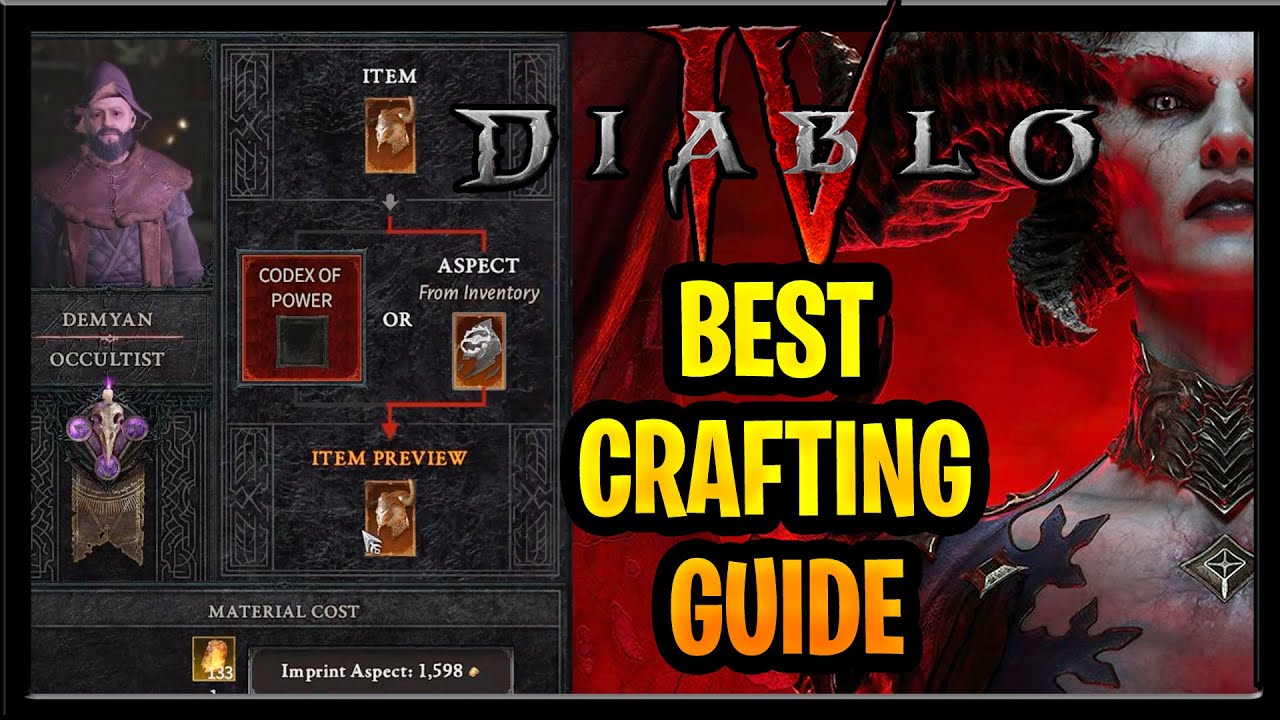

What is Crafting in Diablo 4 and Why It Matters
Diablo 4 crafting is the comprehensive gear enhancement system that becomes absolutely essential from World Tier 3 onwards. It’s not just a side mechanic—it’s the foundation of how you push your build to maximum performance.
I’ll be straight with you: during early game (levels 1-50), crafting is almost negligible. You’ll find better gear faster than you can upgrade it. But once you hit endgame, the entire dynamic shifts. The difference between a decent build and a min-maxed character comes down to mastering the crafting systems.
You might wonder: Why invest time in crafting when you can just farm better drops? Because in World Tier 4, finding the perfect stat combination happens once a month, but with crafting, you can transform a good item into an exceptional one in 30 minutes.
Crafting encompasses these core systems:
- Tempering – adding new affixes to your gear
- Masterworking – upgrading existing stats
- Sanctification – final-tier irreversible upgrades (Season 11)
- Runecrafting – creating and socketing runes (Vessel of Hatred)
- Enchanting – rerolling a single affix
- Gem Crafting – upgrading gems and creating sockets
Each system has specific rules, costs, and optimal strategies. I’ll break them all down in practical terms you can actually use.
Crafting Vendors Overview – Who Does What and Where to Find Them 🔨
Sanctuary provides 4 main crafting vendors, each with specialized functions. You’ll find them in every major city (Kyovashad, Ked Bardu, Zarbinzet).
The Blacksmith
Unlocked at: Level 10 (Priority Quest)
The Blacksmith handles all weapon and armor upgrades, repairs, and salvaging. This is where you’ll spend 80% of your crafting time when optimizing gear.
Primary Functions:
✓ Upgrade weapons and armor (up to 4 times per item)
✓ Repair equipment when durability drops
✓ Salvage unwanted gear for crafting materials
✓ Tempering – add new affixes to gear
✓ Masterworking – upgrade existing stats
The upgrade system increases base weapon damage and armor values while making affixes more potent. Each upgrade costs increasing amounts of Gold and crafting materials based on item rarity.
💡 Pro tip: Mark items as „Junk“ in your inventory, then use the Blacksmith’s „Salvage All Junk“ option. This saves massive time and ensures you never accidentally sell valuable gear.
⚠️ Critical detail: When gear durability hits zero, ALL affixes and Aspect powers deactivate. Visit the Blacksmith regularly—broken gear is useless gear.
The Jeweler
Unlocked at: Level 20 (Priority Quest)
The Jeweler specializes in gems, sockets, and runes (Vessel of Hatred expansion).
Primary Functions:
✓ Craft and upgrade gems (up to Royal quality)
✓ Add sockets to weapons and armor
✓ Remove gems from socketed items
✓ Runecrafting – create Ritual and Invocation runes
Gems provide percentage-based bonuses that scale with your character. Higher-tier gems offer significantly better returns—a Royal Ruby provides +12.5% Maximum Life compared to +2% from a Crude Ruby.
Runecrafting (introduced in Vessel of Hatred) creates conditional effects. You combine Ritual runes (triggers) with Invocation runes (effects) to create powerful synergies tailored to your build.
The Alchemist
Unlocked at: Level 10 (Priority Quest)
The Alchemist creates consumables and refines materials.
Primary Functions: ✓ Brew elixirs (30-minute stat buffs)
✓ Craft incense (group-wide bonuses)
✓ Upgrade healing potions
✓ Refine crafting materials into higher tiers
Elixirs provide significant stat boosts and 5% XP gain for 30 minutes. Running endgame content without active elixirs is leaving free power on the table.
The Occultist
Unlocked at: Level 25 OR completing any Dungeon with a Legendary Aspect
The Occultist handles advanced endgame mechanics – Aspects, Sigils, and Enchanting.
Primary Functions: ✓ Imprint Legendary Aspects onto gear
✓ Extract Aspects from Legendary items
✓ Enchant gear (reroll one affix)
✓ Craft Nightmare Sigils for dungeons
✓ Salvage Sigils for Sigil Powder
Aspect Imprinting costs Veiled Crystals and Gold. Critical distinction: Aspects from the Codex of Power always roll minimum values, while extracted Aspects retain their original rolls.
❌ Common mistake: Imprinting Codex Aspects onto perfect gear. Always farm for high-rolled Aspect drops or extract them from good Legendary items first.
Enchanting allows rerolling ONE affix per item. After selecting which affix to change, you choose from two random options or keep the original. Once enchanted, that slot becomes permanently locked for future rerolls, and the item becomes untradeable.
Essential Crafting Materials Guide 📦
Understanding materials and their sources dramatically improves farming efficiency. Here’s the complete breakdown.
Common Materials
These drop from salvaging normal and magic items. You’ll accumulate thousands naturally.
| Material | Source | Primary Use |
|---|---|---|
| Iron Chunks | Salvaged weapons | Blacksmith upgrades |
| Rawhide | Salvaged armor | Blacksmith upgrades |
| Superior Leather | Salvaged armor (rare+) | Higher-tier upgrades |
| Coiling Wards | Salvaged jewelry | Aspect imprinting |
💡 Storage tip: Never worry about hoarding common materials. Salvage everything you don’t use—you’ll need hundreds for Masterworking later.
Rare Materials
These require specific farming strategies and become bottlenecks for advanced crafting.
| Material | Source | Acquisition Method |
|---|---|---|
| Veiled Crystals | Salvaged Legendary items | Helltide farming, Nightmare Dungeons |
| Forgotten Souls | Helltide Tortured Gifts | 250 Aberrant Cinders per chest |
| Sigil Powder | Salvaged Nightmare Sigils | Dungeon completion, World Boss drops |
| Abstruse Sigil Powder | Salvaged high-tier Sigils | Tier 90+ Nightmare Dungeons |
Veiled Crystals are the most critical resource for endgame. You’ll need 50-100+ for full Aspect imprinting and enchanting across your gear.
Forgotten Souls become essential for Sanctification and high-level Masterworking. Farm these during Helltide events when they’re active—this is the most efficient source.
Boss Materials
Specific bosses drop unique materials for summoning other bosses and crafting specialized items.
Key Boss Materials: ✓ Mucus-Slick Egg – drops from Echo of Varshan
✓ Blackened Femur – drops from Lord Zir
✓ Distilled Fear – drops from various endgame bosses
✓ Exquisite Blood – world boss drops
These materials create summoning items for repeatable boss encounters, which drop Unique items and high-rolled Legendary gear.
Seasonal Materials (Season 11)
Season 11 introduced Sanctification-specific materials:
✓ Heavenly Sigils – earned in Torment difficulties
✓ Divine Essence – drops from Lesser Evils
✓ Sanctified Fragments – Helltide completion rewards
Heavenly Sigils transport you to the Heavenly Forge where you can Sanctify items. These are exclusively available in Torment difficulty, making them true endgame content.
Where to Farm Each Material
For Common Materials (Iron Chunks, Rawhide):
- Run any Nightmare Dungeon
- Complete Helltide events
- Farm World Events
For Veiled Crystals:
- Helltide Tortured Gifts (most efficient)
- Nightmare Dungeon completion rewards
- World Boss kills
For Forgotten Souls:
- Helltide Tortured Gifts (250 Aberrant Cinders each)
- Target chests in high-density Helltide zones
For Boss Materials:
- Farm specific boss encounters
- Trade with other players (some materials are tradeable)
Crafting Systems Explained – Deep Dive Into Each Mechanic ⚙️
Now for the practical breakdown of how each system actually works.
Tempering System
Tempering adds new affixes to your gear beyond the base affixes it drops with. This is how you layer additional stats onto already good items.
How Tempering Works:
- Items can be Tempered up to 5 times maximum
- Each Temper adds affixes from a specific category
- Tempering consumes manual durability (different from combat durability)
- After 5 Tempers, the item is permanently locked
Temper Categories:
- Offensive (Damage, Critical Strike, Attack Speed)
- Defensive (Armor, Resistances, Damage Reduction)
- Utility (Movement Speed, Resource Generation, Cooldown Reduction)
- Weapon-Specific (Varies by weapon type)
💡 Strategy: Don’t waste Tempers on mediocre gear. Wait until you have near-perfect base items before Tempering, since you only get 5 attempts.
Materials Required:
- Iron Chunks / Rawhide (50-200 depending on tier)
- Gold (500-5,000 depending on tier)
Masterworking System
Masterworking upgrades existing affixes on your gear to higher tiers. This is the primary way to push stats from good to exceptional.
How Masterworking Works:
- Items can be Masterworked up to 12 ranks
- Each rank improves ALL affixes by 5%
- Every 4th rank (4, 8, 12) provides 25% bonus to ONE random affix
- The process is RNG-dependent for which affix gets the 25% boost
The Reality Check: Masterworking is expensive and RNG-heavy. Getting the 25% boost on your desired affix requires multiple attempts and significant material investment.
Materials Required (per rank):
- Veiled Crystals (5-15)
- Forgotten Souls (1-5 at higher ranks)
- Obducite (seasonal material, 10-50)
- Gold (10,000-100,000)
⚠️ Warning: Don’t Masterwork gear until you’ve finalized Tempering and Enchanting. Once you start Masterworking, those systems become locked on that item.
Sanctification System (Season 11)
Sanctification is the final tier of gear enhancement, introduced in Season 11. This is irreversible and locks the item permanently.
What Sanctification Can Do:
✓ Apply a bonus Legendary power
✓ Upgrade an affix into a Greater Affix
✓ Add a bonus affix from Sanctification pool
✓ Replace an existing affix with a Sanctification affix
✓ Make the item indestructible (no durability loss)
How to Sanctify Items:
Pre-Torment Method:
- Defeat Lesser Evils during Helltide
- Receive invitation to Heavenly Anvil
- Rare chance per boss kill
Torment Method:
- Earn Heavenly Sigils
- Use Sigils to access Heavenly Forge
- Guaranteed Sanctification opportunity
🎯 Critical Strategy: Sanctification is ONE-TIME and PERMANENT. Once Sanctified, you cannot Temper, Masterwork, or Enchant that item again. Only Sanctify absolutely perfect gear.
Best Sanctification Targets:
- Items with perfect base affixes
- Weapons with maximum damage rolls
- Armor pieces with ideal resistances
- Items you’re certain won’t be replaced
Runecrafting (Vessel of Hatred)
Runecrafting creates conditional effects through combinations of Ritual and Invocation runes.
How Runecrafting Works:
- Ritual Runes = Trigger conditions (e.g., „On dealing damage with a skill“)
- Invocation Runes = Effects (e.g., „Gain Movement Speed“)
- Socket both into the same item for the combined effect
Example Combination:
- Ritual: „When you spend 100 Mana“
- Invocation: „Cast Nova on your location“
- Result: Every 100 Mana spent triggers Nova
Runecrafting provides build-specific customization beyond traditional affixes. The system rewards creative combinations tailored to your playstyle.
Materials Required:
- Rune Shards (specific to each rune type)
- Gold
- Socketed item slots
Enchanting
Enchanting allows rerolling one affix per item. This is your tool for fixing almost-perfect gear.
Critical Enchanting Rules:
- You can only ever reroll ONE affix slot per item
- After choosing which affix to reroll, you’re shown two random options
- You can keep the original affix, but the slot remains locked
- Enchanted items become untradeable permanently
- Subsequent rerolls only affect that same slot
Enchanting Costs:
- Veiled Crystals (5-20)
- Gold (20,000-100,000)
❌ Massive mistake players make: Enchanting the wrong affix slot. Once locked, you cannot change it. Always triple-check which stat you’re rerolling.
💡 Best practice: Enchant gear after Tempering but before Masterworking. This ensures you’re investing Masterworking materials into optimized stats.
Gem Crafting
Gem Crafting upgrades gems through quality tiers and creates sockets in gear.
Gem Quality Tiers:
- Crude (base drop)
- Chipped (3 Crude)
- Regular (3 Chipped)
- Flawless (3 Regular)
- Royal (3 Flawless)
Each tier provides significantly better stat bonuses. Royal gems are essential for endgame optimization.
Common Gem Types:
| Gem | Weapon Effect | Armor Effect | Jewelry Effect |
|---|---|---|---|
| Ruby | +% Overpower Damage | +% Maximum Life | +% Resistance to All Elements |
| Sapphire | +% Critical Strike Damage to Crowd Controlled | +% Damage Reduction from Elites | +% Resistance to Cold |
| Emerald | +% Critical Strike Damage to Vulnerable | +% Thorns | +% Resistance to Poison |
| Diamond | +% Ultimate Skill Damage | +% Barrier Generation | +% Resistance to All Elements |
| Topaz | +% Basic Skill Damage | +% Damage Reduction while Control Impaired | +% Lightning Resistance |
Socket Creation Costs:
- 1 socket: Varies by item type (200-1,000 Gold)
- Gems are removable and reusable
Best Farming Routes for Crafting Materials 🗺️
Efficient material farming separates casual players from optimized endgame grinders. Here are the proven routes.
Helltide Farming (Forgotten Souls Priority)
Helltide is the single most efficient source for Veiled Crystals and Forgotten Souls.
Optimal Helltide Route:
- Focus on Tortured Gift Chests (250 Aberrant Cinders)
- Complete Helltide Events for cinder multipliers
- Target high-density mob zones for faster cinder accumulation
- Open Mystery Chests only if capped on cinders
Expected Returns per Helltide (60 minutes): 📊 15-25 Veiled Crystals
📊 8-12 Forgotten Souls
📊 50-100 Legendary items (for salvage or use)
💡 Efficiency tip: Farm in groups. Helltide events scale with players and completing them faster means more chests per hour.
Nightmare Dungeon Materials
Nightmare Dungeons provide consistent material drops and Sigil Powder from completion.
Best Dungeons for Speed Farming:
- Blind Burrows (short, linear)
- Dead Man’s Dredge (compact layout)
- Sirocco Caverns (high mob density)
Run dungeons between Tier 70-90 for the balance between speed and reward quality. Higher tiers take significantly longer without proportional material increases.
Expected Returns (Tier 80, 10 runs): 📊 40-60 Veiled Crystals
📊 200-300 Iron Chunks / Rawhide
📊 50+ Sigil Powder
Boss Farming Loops
Boss materials require specific encounters, but create efficient farming loops when planned properly.
Recommended Boss Loop:
- Farm Echo of Varshan (drops Mucus-Slick Egg)
- Use eggs to summon Lord Zir (drops Blackened Femur)
- Collect Exquisite Blood from World Bosses
- Craft Distilled Fear from boss materials
This loop generates materials for repeatable boss summons while dropping high-quality gear.
Efficient Multi-Purpose Farming Strategy
The most efficient strategy combines multiple objectives:
The „Endgame Efficiency Loop“:
- Start with Helltide (when active) – 60 minutes
- Transition to Nightmare Dungeons – 30 minutes
- Kill World Bosses (when spawned) – 5-10 minutes
- Farm specific bosses with accumulated materials – 20 minutes
This rotation provides comprehensive material coverage while keeping gameplay varied.
Season 11 Crafting Changes – What’s New and What Matters ⚡
Season 11 introduced the Sanctification system and rebalanced several crafting mechanics.
Major Changes in Season 11
Sanctification System (New):
- Final-tier gear enhancement
- Irreversible and permanent
- Accessible through Heavenly Sigils (Torment) or Lesser Evil defeats
Masterworking Adjustments:
- Reduced Forgotten Soul costs by ~20%
- Increased success rates for desired affix upgrades
- Added material compensation for failed Masterwork attempts
Tempering Updates:
- Expanded affix pools for certain categories
- Rebalanced Temper manual durability costs
- Added class-specific Temper categories
New Seasonal Materials:
- Heavenly Sigils (Torment-exclusive)
- Divine Essence (Sanctification resource)
- Sanctified Fragments (crafting component)
Meta Shifts
Previous Meta (Season 10):
- Masterworking to Rank 12 was the endgame ceiling
- Perfect Tempers + perfect Enchant = BiS items
- Forgotten Souls were primary bottleneck
Current Meta (Season 11):
- Sanctification is new BiS ceiling for ultra-endgame
- Perfect Masterwork becomes prerequisite for Sanctification
- Heavenly Sigils are the ultimate bottleneck
The progression path now extends to:
- Get good base item
- Temper optimal affixes
- Enchant one suboptimal affix
- Masterwork to Rank 12
- Sanctify (only on absolute best pieces)
Update History Summary
Season 11 (February 2026):
- Sanctification system added
- Vessel of Hatred expansion integration complete
- Runecrafting expanded with 20+ new rune types
Season 10 (November 2025):
- Masterworking costs reduced
- Enchanting pool expanded
- Trading restrictions adjusted
Season 9 (August 2025):
- Tempering manual durability system introduced
- Gem upgrading costs reduced
- Material storage cap increased
Crafting Tips for Beginners – What to Prioritize First 🎯
If you’re new to Diablo 4’s endgame, this is your roadmap.
Priority #1: Salvage Everything (Levels 1-50)
During leveling, salvage every item you don’t immediately equip. Ignore selling to vendors—materials are infinitely more valuable than gold at this stage.
✓ Build material stockpiles early
✓ Unlock salvage automation at Blacksmith
✓ Mark items as „Junk“ while looting
Priority #2: Upgrade Weapons First (Levels 30-50)
Your first crafting investments should go into weapon upgrades at the Blacksmith. Weapon damage scales your entire build.
✓ Upgrade weapons every 10 levels
✓ Don’t upgrade armor until World Tier 3
✓ Save Veiled Crystals for endgame
Priority #3: Learn Enchanting Basics (Level 50+)
Once you hit endgame, start practicing Enchanting on non-critical gear to understand the system.
✓ Enchant cheap Legendary items first
✓ Learn which affixes roll in which categories
✓ Don’t Enchant items you’ll replace soon
Priority #4: Farm Helltide Before Everything Else (World Tier 3+)
Helltide provides more materials per hour than any other activity. Make it your default farming content.
✓ Target Tortured Gift chests
✓ Focus on Veiled Crystals and Forgotten Souls
✓ Salvage all Legendary drops
Common Mistakes to Avoid
❌ Tempering gear you’ll replace – Only Temper endgame-quality items
❌ Enchanting before Tempering – Temper first, then Enchant to fix any bad Temper results
❌ Masterworking prematurely – Wait until Tempers and Enchants are perfect
❌ Hoarding crafting materials – Use them. You’ll get more faster than you think
❌ Selling Legendary items – Always salvage for Veiled Crystals
Resource Management
Gold Management:
- Repair costs are negligible compared to crafting
- Enchanting is the biggest gold sink
- Farm 1-2 million gold before serious Masterworking
Material Priorities:
- Veiled Crystals (always farm)
- Forgotten Souls (Helltide)
- Everything else accumulates naturally
When to Start Crafting
Level 1-50: Only basic Blacksmith upgrades
Level 50-70: Start Enchanting and Tempering
Level 70-90: Full Masterworking progression
Level 90+: Sanctification on perfect gear
Advanced Crafting Strategies – Optimization for Endgame Veterans 💎
These strategies assume you understand the basics and want maximum efficiency.
Min-Maxing Gear Priority System
Not all gear slots deserve equal investment. Here’s the mathematically optimal priority:
Tier 1 (Highest Impact):
- Weapon
- Amulet
- Gloves
Tier 2 (Moderate Impact): 4. Rings (both) 5. Chest Armor 6. Helm
Tier 3 (Lower Impact): 7. Pants 8. Boots
Focus Masterworking and Sanctification on Tier 1 items first. The damage and stat scaling from weapons and amulets far exceeds armor pieces.
Material Efficiency Formula
The „Crafting ROI“ calculation:
For each item, calculate: (Stat Improvement %) × (Slot Impact Weight) ÷ (Material Cost)
Only proceed with crafting if ROI > 0.5
Example:
- Weapon upgrade: +15% damage increase
- Weapon weight: 10 (highest)
- Material cost: 50 Veiled Crystals
- ROI = (15 × 10) ÷ 50 = 3.0 ✓ Worth it
Example 2:
- Boots upgrade: +3% movement speed
- Boots weight: 2 (lower)
- Material cost: 50 Veiled Crystals
- ROI = (3 × 2) ÷ 50 = 0.12 ❌ Not worth it yet
Alternative Character Strategies
The „Main + Alt Farming“ Strategy:
- Run Helltides on main character (optimized for speed)
- Funnel materials to alt characters
- Test experimental builds on alts with excess materials
- Transfer successful builds back to main
This approach lets you experiment without risking your main character’s progression.
The „Seasonal Fresh Start“ Strategy:
Each season:
- Rush to World Tier 4 (ignore crafting)
- Farm materials for 20-30 hours
- Craft one perfect set of gear
- Push leaderboards with optimized build
Economic Tips
Trading Optimization:
- Trade Boss materials you don’t need
- Never sell Veiled Crystals or Forgotten Souls
- Flip underpriced Uniques on trading forums
Material Conversion Efficiency:
Convert lower-tier materials into higher tiers at the Alchemist when:
- Conversion rate is 3:1 or better
- You’re capped on storage
- You need specific materials immediately
Gold Generation for Crafting:
Best gold farming methods (per hour): 📊 Nightmare Dungeon speed runs: 500k-800k
📊 Helltide chest opening: 300k-500k
📊 World Boss farming: 200k-400k
The „Perfect Item“ Checklist
Before investing in Sanctification, verify:
✓ Base item has maximum rolled affixes (check stat ranges)
✓ All 5 Tempers are optimal for your build
✓ Enchant has been used on the worst affix
✓ Masterwork Rank 12 with 25% bonuses on top 3 stats
✓ Item is BiS for your build (not just „good“)
Only then consider Sanctification.
Advanced Tempering Technique
The „Temper Fishing“ Strategy:
Since you get 5 Temper attempts:
- Temper once and evaluate result
- If bad, consider salvaging and trying a new base item
- If good, continue to attempt 2
- Perfect all 5 attempts before moving to Enchanting
This prevents wasting Enchants on poorly-Tempered items.
FAQ
Q: Can I remove Tempering from an item?
A: No. Tempering is permanent and cannot be removed or reset. Choose your Tempers carefully, as you only get 5 attempts per item.
Q: What’s the most efficient use of Veiled Crystals?
A: Prioritize weapon Enchanting first, then amulet. Veiled Crystals are renewable through Helltide farming, so don’t hoard them excessively.
Q: Should I Sanctify items before or after Masterworking?
A: Always Masterwork BEFORE Sanctification. Sanctification locks the item permanently, preventing any further Masterworking, Tempering, or Enchanting.
Q: How do I get Heavenly Sigils?
A: Heavenly Sigils are exclusive to Torment difficulty. They drop from high-tier content completion, including Torment Nightmare Dungeons and specific boss encounters.
Q: Can I trade crafted items?
A: Items become untradeable after Enchanting. Everything else remains tradeable until Enchanted. Plan accordingly if you want to trade gear.
Q: What happens if I Masterwork and get the 25% bonus on a bad affix?
A: You can continue Masterworking, but the same affix won’t get additional 25% bonuses. The RNG element is permanent for each Masterwork rank.
Q: Is it worth upgrading low-level gems?
A: Generally no. Farm for higher-tier gems in endgame content rather than upgrading Crude gems through all tiers. The material cost isn’t worth it.
Q: How many Temper manuals do I need?
A: You need 1 Temper manual per Temper attempt. Since items can be Tempered 5 times, budget 5 manuals per item you plan to fully optimize.
Q: Can I Sanctify the same item twice?
A: No. Sanctification is a one-time, permanent upgrade. Once Sanctified, the item cannot be Sanctified again or modified in any way.
Q: What’s the best crafting system to focus on first?
A: Start with Enchanting to fix bad affixes on otherwise good items. Then Tempering, followed by Masterworking. Save Sanctification for absolute endgame.
Q: Do crafting bonuses from Elixirs affect success rates?
A: No. Crafting success is deterministic, not RNG-based (except Masterwork affix selection). Elixirs only affect combat stats.
Q: Can I apply multiple Aspects to one item?
A: No. Each item can hold only one Legendary Aspect. Choose the most impactful Aspect for each slot.
Q: How do I know which affix will get the 25% Masterwork bonus?
A: You don’t. It’s completely random. This is why you should only Masterwork items where any outcome is acceptable.
Q: Is there a limit to how many items I can craft per day?
A: No daily limits exist. Your only restriction is available materials and gold.
Q: What’s better: multiple decent Masterwork items or one perfect item?
A: One perfect item. Concentrating resources into BiS gear provides better returns than spreading materials across multiple pieces.
Q: Can I extract Aspects from Sanctified items?
A: Yes, but it destroys the item permanently. Given the investment in Sanctified items, this is almost never worth it.
Q: Do Seasonal materials carry over to Eternal realm?
A: Seasonal materials convert to Eternal-equivalent materials at season end, but Sanctification-specific items remain seasonal-exclusive.
Q: How long does it take to farm materials for one perfect item?
A: Approximately 40-60 hours of focused farming for all materials needed to Temper, Enchant, Masterwork to Rank 12, and Sanctify a single item.
Q: Are there crafting shortcuts for returning players?
A: Not really. Each seasonal reset requires re-farming materials. However, knowledge of efficient routes significantly speeds up the process compared to first-time players.
Q: What’s the biggest material bottleneck in endgame?
A: Heavenly Sigils for Sanctification in Season 11. Previously, Forgotten Souls were the main bottleneck for Masterworking.