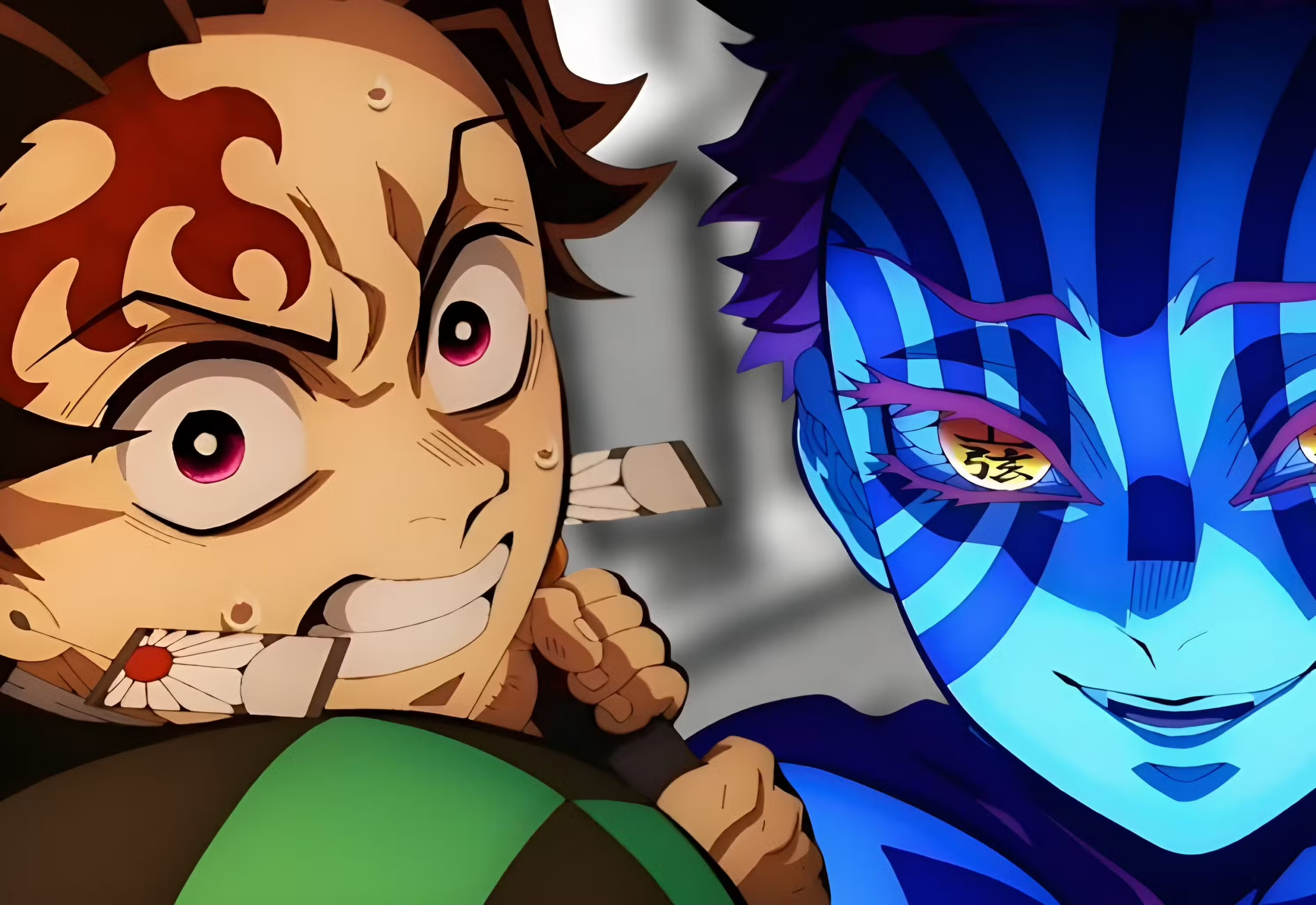
At the most basic level, manga is Japanese, manhwa is Korean, and manhua is Chinese. From there, differences show up in how they are read, how they are produced, and how stories are paced. Modern manhwa, for example, is strongly tied to the webtoon format, designed to be read by scrolling on a phone. Manga is still heavily associated with print pages and black and white art, while manhua is often full color and widely published digitally, with styles that vary a lot depending on region and platform.
Quick comparison
| Aspect | Manga (Japan) | Manhwa (Korea) | Manhua (China) |
|---|---|---|---|
| Typical format today | Print volumes and digital pages | Webtoon style, vertical scroll is very common | Digital chapters are very common, often full color |
| Typical color | Mostly black and white | Mostly full color | Often full color |
| Reading direction | Usually right to left | Usually left to right | Usually left to right |
| Common pacing style | Page turns, panel density, dramatic spreads | Scroll reveals, strong cliffhangers per “screen” | Varies widely, often closer to web release pacing |
Manga
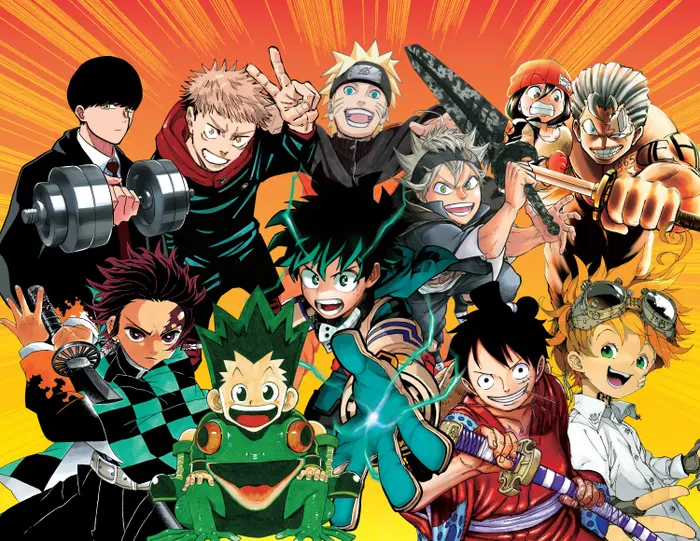
Manga refers to comics from Japan. The most recognizable traits are black and white art, heavy use of screentones, and a right to left reading direction (you read pages from right to left, and panels within the page follow that flow). Manga is frequently serialized chapter by chapter, then collected into paperback volumes. Because it is built around printed pages, manga often uses page turns for reveals, double page spreads for impact, and tighter panel layouts that reward slower reading.
That said, manga is not limited to one look. You can find everything from minimalist comedy to highly detailed dark fantasy, from quiet slice of life to intense battle series. There is also full color manga, especially for digital releases, but black and white remains the most common “default” due to tradition and production speed.
Manhwa
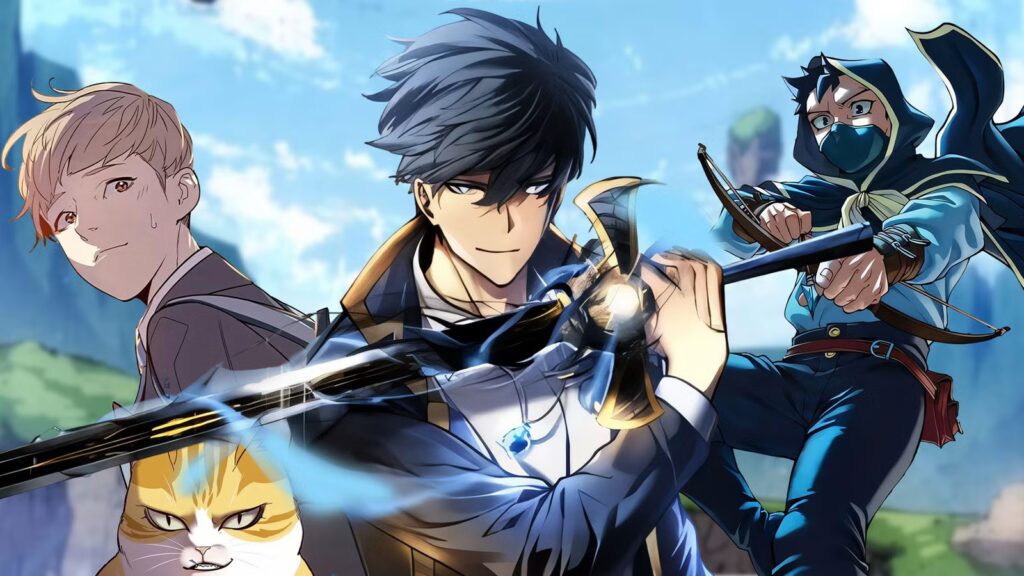
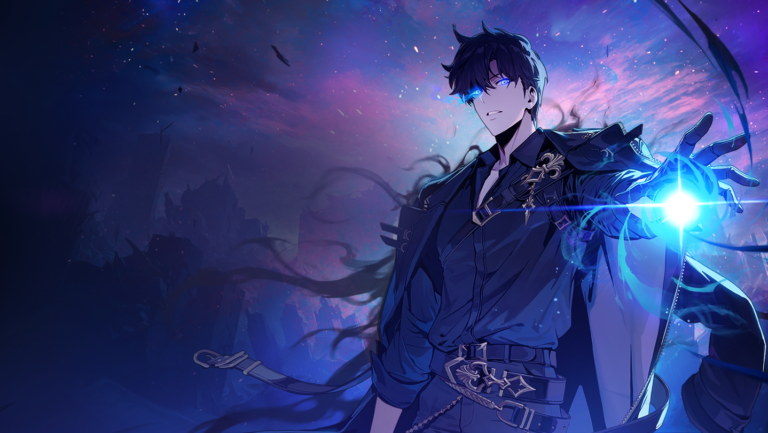
Manhwa refers to comics from Korea. Historically, Korean comics also existed in print, but modern international popularity is closely tied to webtoons, which are designed for smartphones. This usually means full color art, vertical scrolling, and a top to bottom reading flow. Panels are often spaced out to control timing, create suspense, and land reveals exactly when the reader scrolls. Because of this, manhwa can feel very showlike, with frequent cliffhangers and strong end of episode moments.
Manhwa also often has a studio style of production, where teams handle line art, coloring, backgrounds, and effects. That is one reason many series maintain a consistent weekly release rhythm with polished color pages. Common popular categories include action fantasy, modern romance, dungeon and hunter stories, and many adaptations from web novels.
Manhua
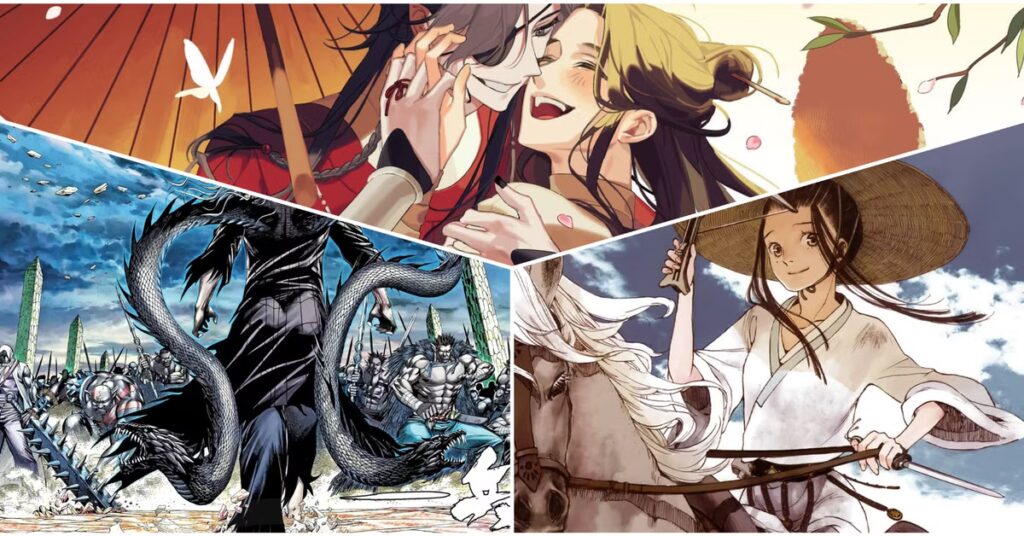
Manhua is a broad term for comics from Chinese speaking regions, and the look can vary a lot. Many popular manhua releases are full color and published digitally, often with a left to right reading direction. Depending on platform and audience, you can see both page based layouts and scroll friendly layouts. You will also see a wide range of themes, including modern romance, historical drama, wuxia and martial arts stories, and xianxia style cultivation fantasies.
Compared to manga and webtoon manhwa, manhua can feel less uniform in production style because it spans different regions and publishing ecosystems. Some manhua leans closer to traditional comic pages, while others fully embrace the mobile first scroll format.
How to tell them apart in 10 seconds
- Check reading direction: right to left often suggests manga; left to right often suggests manhwa or manhua.
- Look at color: black and white strongly points to manga; full color often points to manhwa or manhua.
- Look at the layout: long vertical spacing and scroll timing is classic webtoon manhwa.
- Look at cultural cues: names, signage, clothing, and setting details often hint at origin.
Important note about exceptions
These are trends, not strict rules. There is black and white manhwa, there is full color manga, and there is page formatted manhua that reads like traditional comics. The easiest way to be accurate is to treat the words as origin labels first, and format expectations second.
If you want, tell me what kind of stories you like (action, romance, horror, comedy, fantasy), and I will suggest a starter list split into manga, manhwa, and manhua.