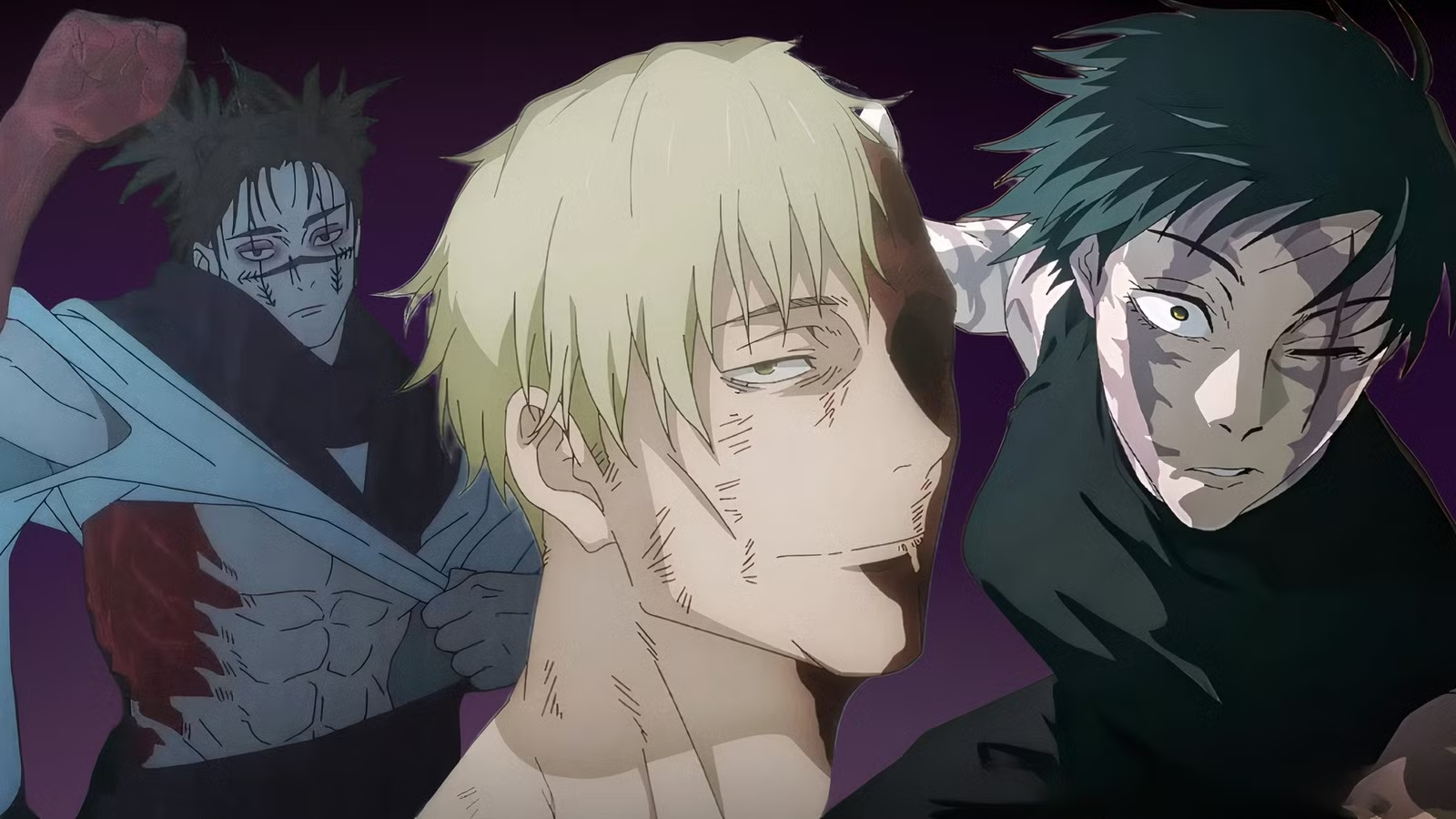

What Does It Mean To Adapt Manga Into Anime? 🎬
Adapting manga to anime isn’t just slapping colors and motion onto static panels. It’s an interpretative art form where creators decide the weight behind every punch, the volume of destruction, and the duration of silence before catastrophe strikes.
Manga gives you the blueprint – static frames loaded with emotion that your brain fills in with sound and movement. Anime, on the other hand, determines how hard that fist connects, how long the explosion reverberates, and how deeply a character’s death cuts.
You might be wondering: Why would anime surpass the original work? Because when MAPPA got Jujutsu Kaisen, they didn’t just adapt it – they amplified it. They took blueprints for a small apartment and built a skyscraper.
Gege Akutami‘s artwork thrives on raw intensity and emotional impact, but the anime extends that into cinematic territory. A two-panel exchange can become a full urban disaster, a brief flashback transforms into emotional catharsis, and complex exposition gets told through visual storytelling.
Sukuna vs. Jogo – Divine Flames Devouring Shibuya 🔥
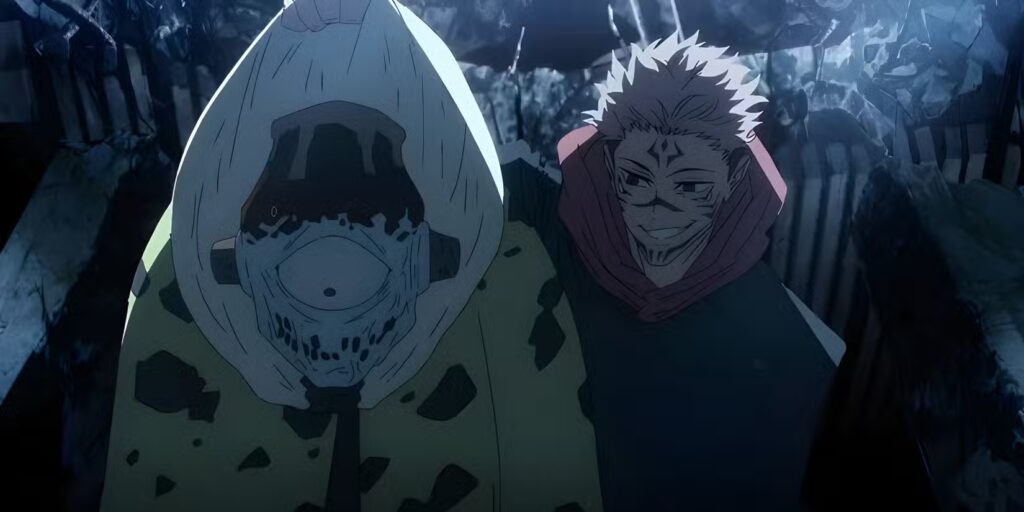
In the manga, this confrontation spans a few chapters. The anime turned it into a city-wide inferno that showcases the terrifying power gap between them.
Why The Anime Version Dominates
Jogo unleashes flames across Shibuya, and Sukuna effortlessly dodges, slices through fire, and physically dominates him. When Jogo activates Maximum: Meteor, the anime shows:
✓ Buildings melting under the intense heat
✓ The environment surrendering to thermal devastation
✓ Sukuna’s power becoming even more horrifying
The final moment – Sukuna’s Divine Flame technique – isn’t just another fire attack. It’s a duel of flames. The lighting, sound design, and destruction create the impression of a nuclear detonation.
💡 Insider insight: That moment of silence when Sukuna tells Jogo to “stand proud” carries emotional weight in the anime. It transforms a villain’s defeat into a tragic farewell rather than just another death.
The Technical Execution
| Aspect | Manga | Anime |
|---|---|---|
| Fight Duration | Few chapters | Extended sequences |
| Environmental Damage | Implied | Fully visualized |
| Emotional Impact | Strong | Devastating |
The anime doesn’t just show Sukuna’s superiority – it makes you feel the temperature difference between a Special Grade Curse and the King of Curses.
Yuji & Nobara vs. Death Paintings – Combat Choreography Perfection 💀
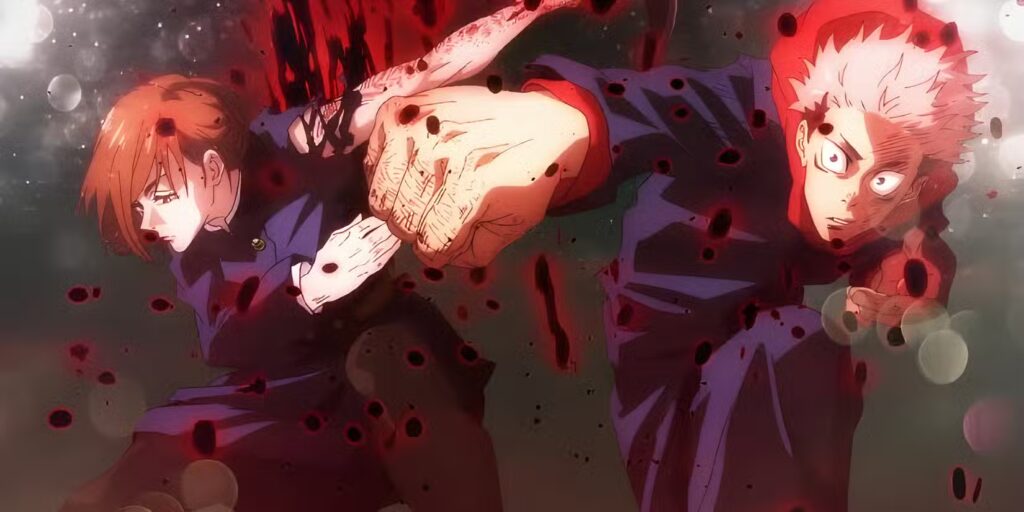
The manga delivered a solid fight. The anime turned it into lethal dance choreography.
What makes this battle superior in anime form:
- Extended movement sequences – Every dodge, strike, and counter flows naturally
- Dynamic camera work – Angles that emphasize speed and impact
- Technique visualization – Resonance and Maximum: Wing King become visual spectacles
Among the best anime-exclusive additions:
✓ Yuji sprinting through the forest carrying Nobara – The urgency and physical power perfectly underscored
✓ Coordinated Black Flash sequence – Dramatic timing where the environment responds to each hit
✓ Sound design collaboration – Audio and visual elements working in perfect sync
❌ Common fan misconception: Thinking the manga portrays their teamwork just as effectively. The anime sells the concept that Yuji and Nobara operate in perfect synchronization – and there’s zero chance they’re losing.
The Resonance Effect
The visualization of Nobara’s Resonance technique in anime form is a masterclass in adapting abstract manga concepts. The manga shows the effect; the anime makes you understand the pain it inflicts.
Nanami Kento – The Beach That Never Was 🏖️
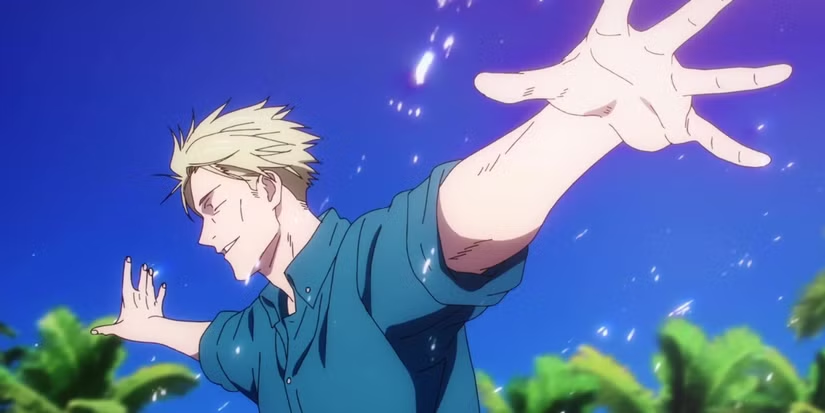
Nanami’s death hurts in both versions. But the anime extended the emotional devastation by seamlessly blending his retirement dream in Malaysia with his final moments in Shibuya.
Why The Anime Execution Hits Harder
The visualization of peaceful beach life he constantly mentions is depicted during his last stand against transfigured humans. The transition between reality and dream flows smoother and more symbolically than manga panels could achieve.
The voice acting and pacing transform his goodbye to Yuji into a transfer of responsibility rather than just another casualty. The anime converted a horrific death into a quiet emotional departure.
The color palette shift – from the bright, warm tones of his Malaysian beach dream to the dark, oppressive atmosphere of Shibuya – creates a visual metaphor for hope dying in real-time.
Toji Fushiguro vs. Dagon – Slasher Film In Paradise ⚔️
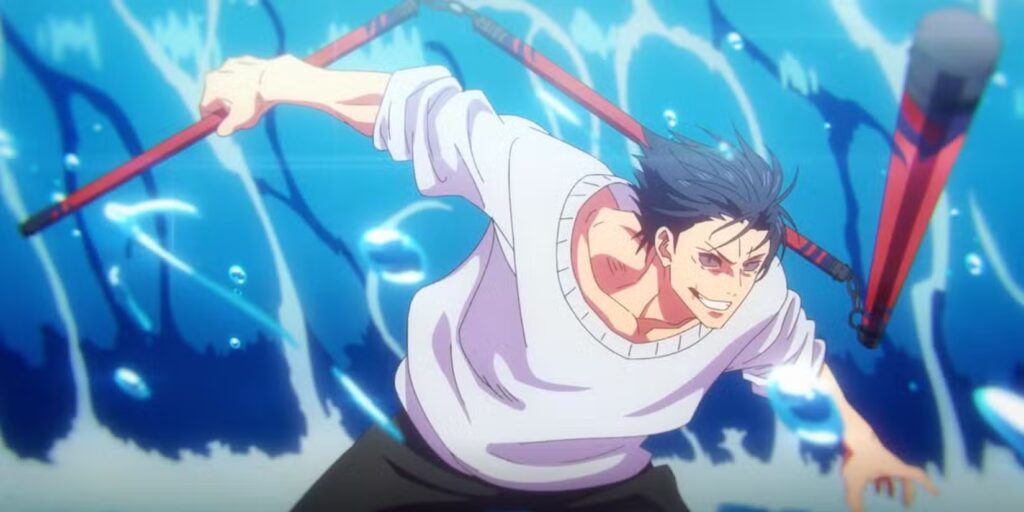
In the manga, Toji’s entrance into Dagon’s domain is cool. In the anime, it became a full-blown slasher sequence worthy of horror cinema.
Toji’s speed in manga is shown simply – he appears behind people. The anime dramatizes the physics of his movement:
✓ Rips through Dagon’s shikigami like a blender dropped into a fruit bowl
✓ Heavy, predatory sound effects emphasize his lack of cursed energy
✓ Appears as a glitch in the Matrix, designed specifically to ruin Dagon’s existence
💡 Pro insight: The way Toji sharpens the “Playful Cloud” staff against itself while dragging Dagon across the beach demonstrates his combat experience through brutal yet highly intelligent methodology.
Heavenly Restriction Visualized
The anime showed the true power of Heavenly Restriction by ensuring every movement has weight but remains effortless. While everyone else plays a supernatural RPG, Toji plays a brutal beat-em-up.
The contrast becomes clear: Domain Expansion creates an infinite aquatic battlefield, and Toji treats it like a shooting range. The anime uses dynamic camera angles to show how he exploits vertical space, something the manga could only imply.
Choso vs. Yuji – The Bathroom Brawl Masterpiece 🚽
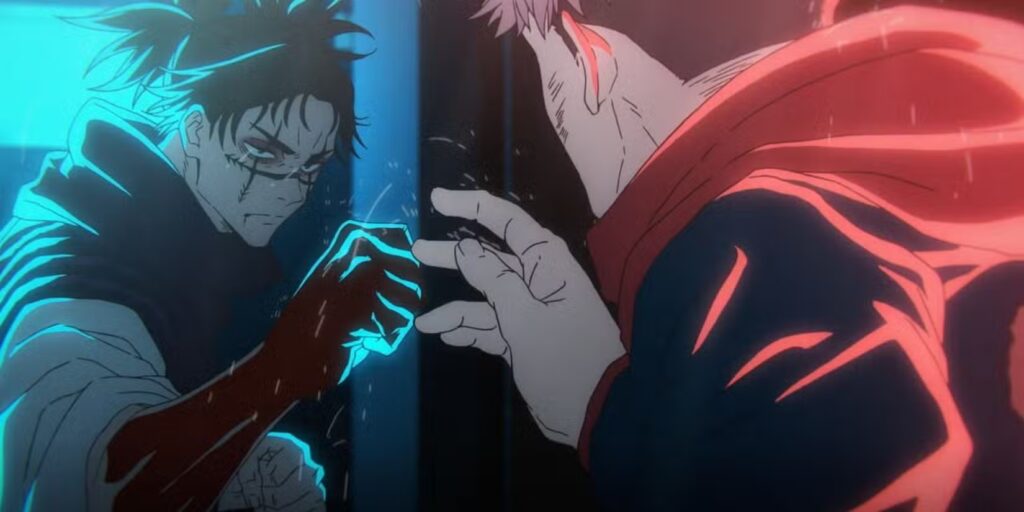
This isn’t a fight. This is a 10-minute case study in why MAPPA deserves every animation award on the shelf.
The manga delivered a strategic close-quarters battle. The anime transformed it into John Wick-style choreography with these upgrades:
- Blood Vision introduction – You see the world through Choso’s crimson lenses as he calculates Piercing Blood trajectories
- Water from burst pipes – Mingles with their movements, making the battle painfully visceral
- That abs scene with Choso – Anime-exclusive moment that fans absolutely devoured
Why This Fight Stands Above
The choreography was translated to the point where it became logical, not just cool. Yuji weaponized the claustrophobic environment while Choso’s blood attacks resembled watching razor blades slice through the screen – aesthetic pleasure meets narrative purpose.
| Element | Manga | Anime |
|---|---|---|
| Fight Duration | Brief | Extended 10+ minutes |
| Blood Manipulation | Static panels | Fluid dynamic effects |
| Environmental Use | Minimal | Integral to choreography |
❌ The manga barely showed the fight – the anime transformed it into one of the series’ best combat sequences with an incredible soundtrack.
Culling Games Rules – Making Sense Of Chaos 🎮
When Chapter 146 dropped, readers struggled with Kenjaku’s explanation. The wall of text was a problem.
The Anime Solution
The anime solved this by giving the Culling Game a holographic high-tech upgrade:
✓ Visualization through Kogane with sleek UI transitions
✓ Strategic diagrams explaining the point system
✓ Death-by-technique-removal rule presented as game mechanics
💡 Insider tip: Less reading, more seeing = smarter storytelling. The anime maintained the Culling Game arc’s flow by integrating explanation into the world through digital simulations without exhausting lectures.
The annoying yet useful Kogane character, combined with the chilling logic of the rules, became a welcome addition for fans. It proved even a ruleset can be a highlight when handled with sufficient sci-fi flair.
Breaking Down Complex Systems
The anime doesn’t just tell you how Culling Games work – it shows you through:
- Interactive holographic displays
- Visual player tracking
- Territory boundary visualization
- Colony separation graphics
This transforms abstract concepts from the manga into concrete visual information that your brain processes naturally.
Maki Zen’in – The Clan Extinction Event ⚡
The Perfect Preparation arc was already popular in manga form. The anime reinvented it entirely.
Maki’s raid on the Zen’in compound was filmed like Prestige TV – focus on shadows, silence, and the sound of a sword cutting through arrogance.
Key Upgrade Moments
✓ Zen’in Hei massacre – Every slash carries weight and impact
✓ Battle with Jinichi – The size of his fist makes Maki appear as an unstoppable natural force
✓ Final confrontation with Naoya – Projection Sorcery created a trippy 24-fps visual showcase
Watching fully awakened Maki move with the same weightless grace as Toji during his fight with Gojo is the moment when the Zen’in clan didn’t just lose a member – they created their own extinction event.
The Naoya Fight Breakdown
Naoya’s Projection Sorcery in anime form becomes a visual representation of speed that the manga could only hint at. The 24-frame animation technique creates:
- Stuttering motion that represents his cursed technique
- Clear visual distinction between normal and accelerated movement
- The moment Maki counters at full speed becoming a payoff for patient viewers
The anime took a cool manga scene and elevated it into the birth of a new Heavenly Restriction legend.
Final Analysis 📊
MAPPA proved that adaptation doesn’t mean simple copying. These seven scenes in Jujutsu Kaisen anime surpassed the manga through:
Technical Aspects:
- Superior fight choreography with logical flow
- Emotionally resonant sound design
- Complex concept visualization
Narrative Aspects:
- Extended emotionally crucial moments
- Better comprehension of strategic concepts
- Transformation of cool scenes into legendary sequences
The anime doesn’t replace the manga – it complements it. Both versions have strengths, but these specific moments gained new dimensions through animation, sound, and extended choreography that manga’s static medium couldn’t capture.
FAQ
Q: Is the anime better than manga for all scenes?
A: No. Manga has its own advantages in pacing and allows you to read at your own tempo. But these specific scenes gained new dimensions through animation, sound, and extended choreography that enhance the experience beyond what static panels can deliver.
Q: Should I read the manga if I’ve watched the anime?
A: Depends on you. The anime covers most important moments, but manga contains certain details and internal monologues that anime cut or shortened. Plus, manga is currently further ahead in the story with ongoing arcs.
Q: Which studio adapted Jujutsu Kaisen?
A: MAPPA (Maruyama Animation Produce Project Association). They’re known for high-quality adaptations including Attack on Titan Final Season, Chainsaw Man, Vinland Saga, and more.
Q: How many seasons does Jujutsu Kaisen anime have?
A: Currently two seasons plus the Jujutsu Kaisen 0 film. Season 2 covers the Hidden Inventory/Premature Death arc and Shibuya Incident arc. Season 3 hasn’t been officially announced yet.
Q: Is Jujutsu Kaisen suitable for anime beginners?
A: Yes, but prepare for dark tones and brutal scenes. It’s not standard shonen – it has mature themes and high stakes from the beginning. The story structure is accessible, but content can be intense.
Q: When will Season 3 be released?
A: No official date has been announced. MAPPA typically needs time for production due to their high-quality animation standards. Follow official announcements from MAPPA and the production committee.
Q: Why are some anime scenes longer than manga?
A: Anime often expands battle scenes to better utilize the medium. Motion, sound, and timing allow extending moments without losing pacing. What takes seconds to read can become minutes of screen time while maintaining engagement.
Q: Is the Culling Game arc difficult to understand?
A: In the manga, definitely. The anime simplified it through rule visualization and system explanations, making it more accessible for casual viewers. The holographic UI elements help break down complex mechanics into digestible information.
Q: Does the anime follow the manga exactly?
A: Mostly yes, with some extended scenes, slight rearrangements, and anime-original additions that enhance the experience. Core plot points remain faithful to Gege Akutami’s original work.
Q: Which version should I experience first?
A: Either works. The anime provides complete audiovisual experience with incredible production value. The manga offers faster pacing and is ahead in the story. Choose based on your preference – visual storytelling or reading experience.