
What exactly is John Carpenter’s Toxic Commando?
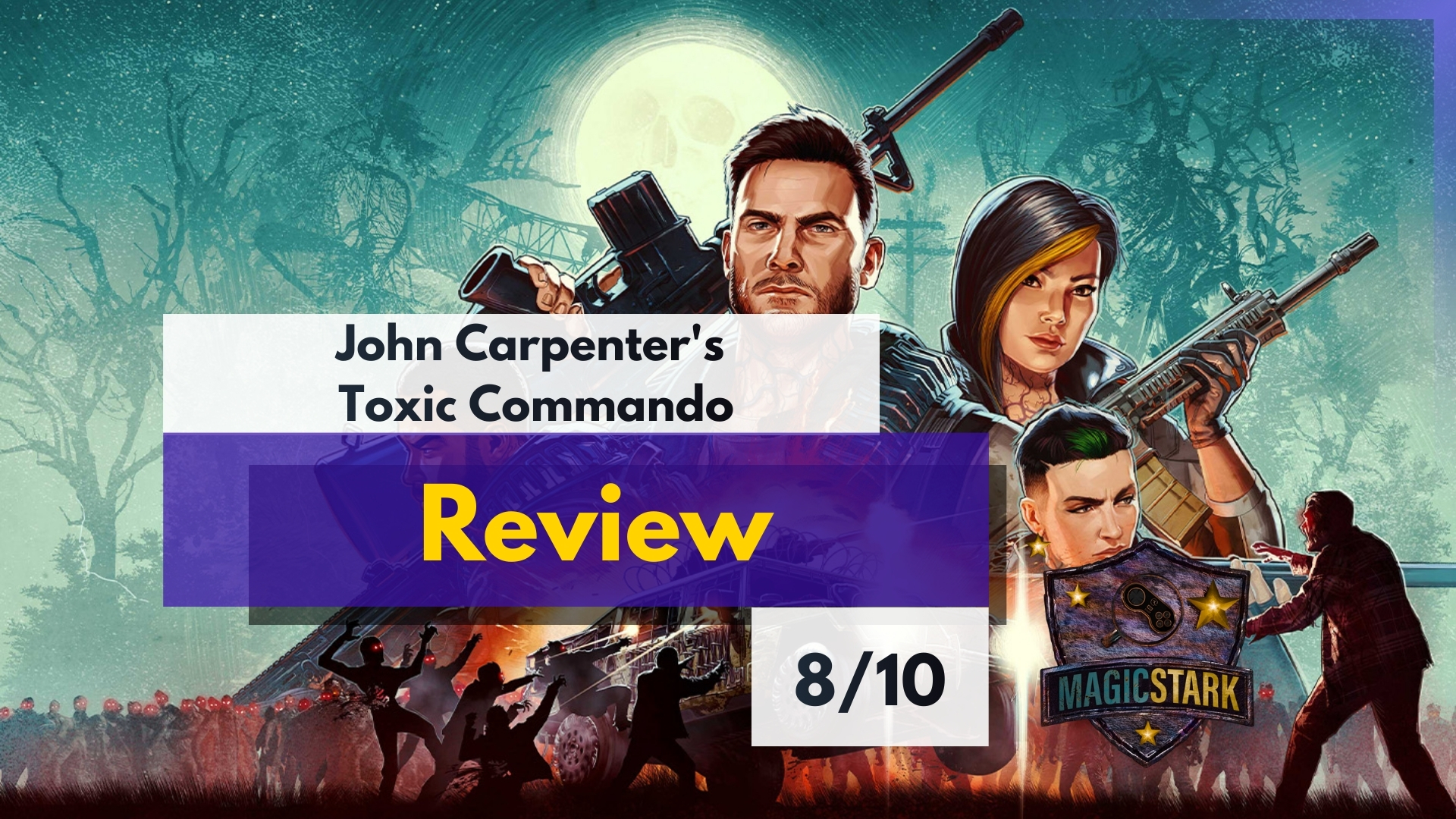
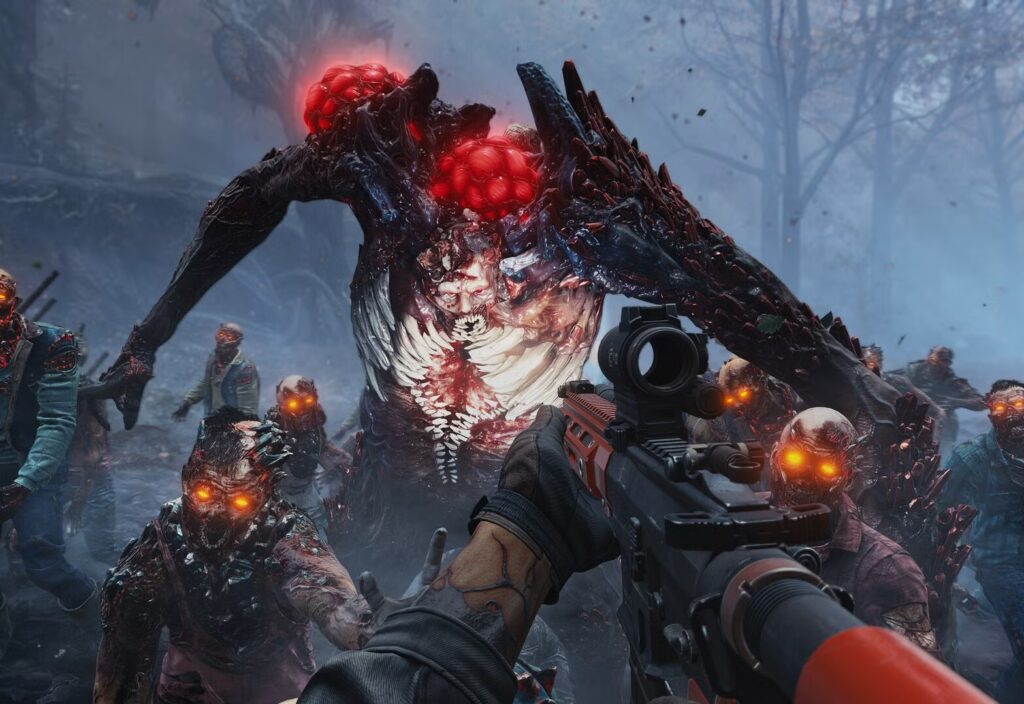
If you are a fan of 80s action-horror, the name John Carpenter isn’t just a credit on a screen; it’s a synonym for cult atmosphere. The legendary director of The Thing and Halloween hasn’t teamed up with a Hollywood studio this time, but with the developers at Saber Interactive. The result is John Carpenter’s Toxic Commando, a game that doesn’t try to revolutionize the co-op shooter genre but rather offers its most fun and stylish interpretation in years. At its core, it’s a horde shooter for 1 to 4 players that takes the best parts of Left 4 Dead or World War Z and enriches them with elements we haven’t seen in the genre before.
The game takes you to the near future, where tech mogul Leon Dorsey’s attempt to mine energy from the Earth’s core has spiraled into a global catastrophe. Instead of an infinite energy source, Dorsey accidentally unleashed an entity known as the Sludge God. This eldritch being immediately began transforming the Earth’s surface into toxic goo and humans into bloodthirsty mutants called Homo Mortis. Since Dorsey lacks the funds for an elite army, he hires four outsiders—the Toxic Commandos. During the intro mission, they are infected with a virus, but thanks to special vests, they can convert this infection into unique combat abilities.
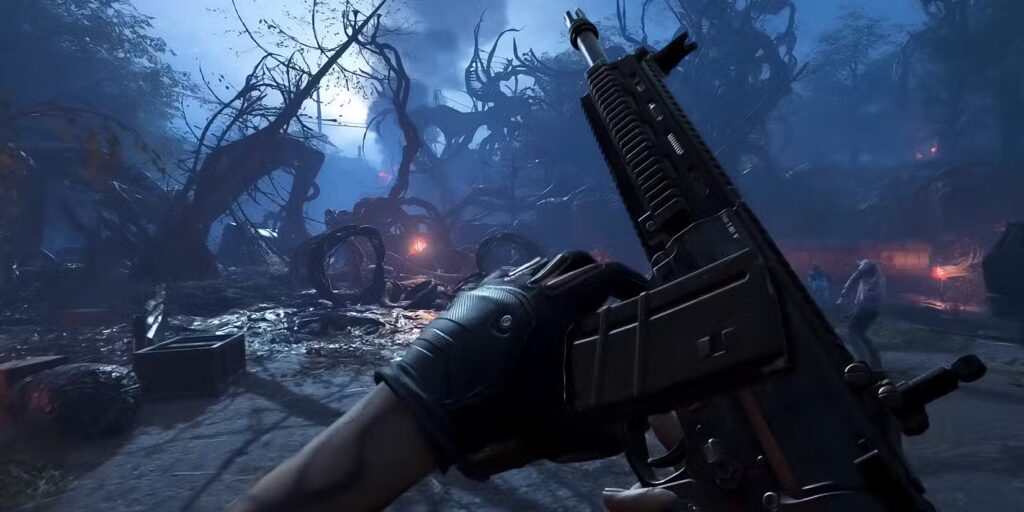
This premise sets the tone for the entire game. It’s an unashamed “B-movie” that isn’t afraid of its pulp aesthetic. For $39.99, you get nine missions split into three acts, which you can blast through in about 10 hours, but the real magic lies in replaying on higher difficulties with friends. The game runs on the proven Swarm Engine, which the developers polished to perfection for Space Marine 2, and it shows at every turn. The level of destruction and the number of enemies on screen are currently at the top of the genre.
Story & Atmosphere
The story component of the game is exactly what you would expect from Carpenter—bold, cheesy, and intentionally over-the-top. While the main heroes Cato, Astrid, Ruby, and Walter are visually distinct, their characterization lags behind the excellent world design. They often slip into a brand of sarcasm that starts to feel generic after a few hours. Nevertheless, their interactions with Leon Dorsey, who constantly speaks to you from HQ, give the game the right feel of an 80s action flick. Leon functions as your operator and mentor, the man who caused the apocalypse but is now trying to save the world with your help—and at the lowest possible cost.
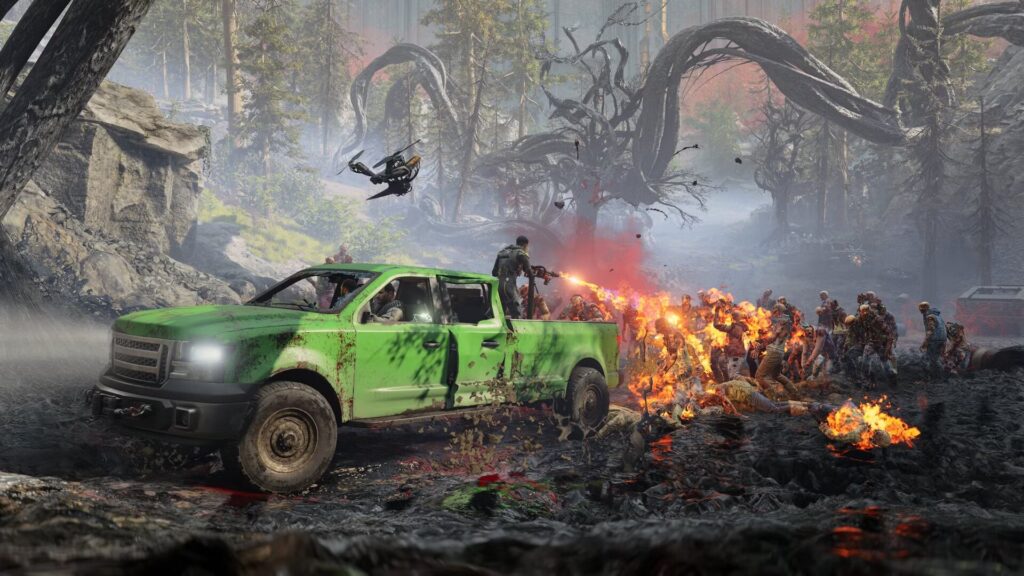
Where Toxic Commando absolutely outclasses the competition, however, is its audiovisual identity. The visual style aims for a grindhouse aesthetic. The environments are filled with toxic mud, slime, tentacles, and neon reflections. Every map feels like a scene from a lost Carpenter film. The atmosphere is completed by a phenomenal synth-heavy soundtrack. Carpenter did not hide his signature style here, and together with his son Cody, he created music that is aggressive, thumping, and perfectly rhythmizes the slaughter of mutant hordes. As Shacknews noted, the soundtrack is a “home run”—exactly the bass beats you want to hear when zombies explode like bloody piñatas.
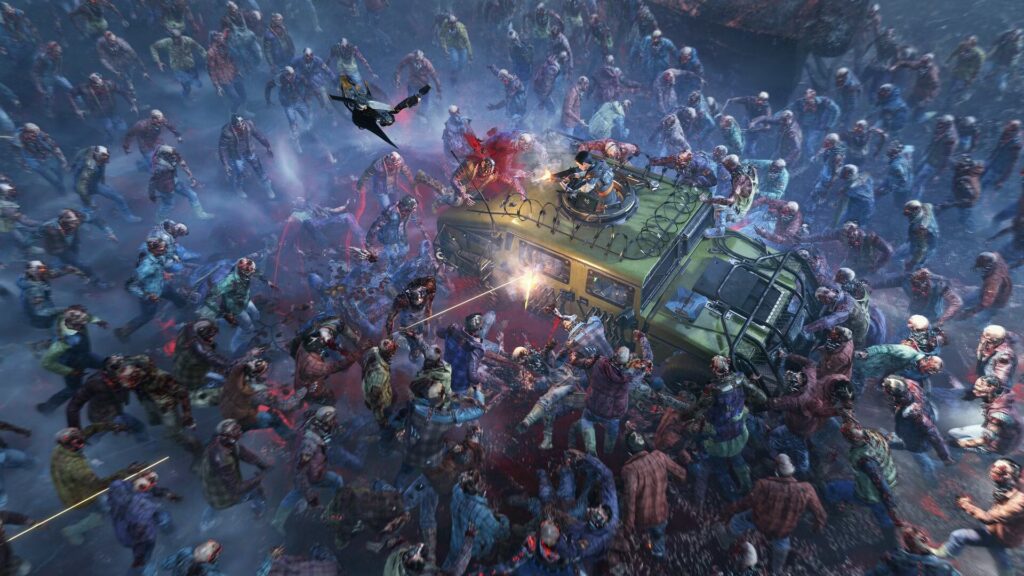
Furthermore, the game isn’t afraid to use humor. Easter eggs referencing Carpenter classics like Big Trouble in Little China or Escape from New York are scattered throughout the levels. Although the narrative thread lacks deep coherence between individual missions, as a whole, the game feels very compact. It is simply a tribute to the genre that doesn’t take itself seriously and just wants to entertain you. If you are looking for a deep philosophical story, look elsewhere; if you want to see modern graphics meet video store aesthetics, you’re in the right place.
Gameplay & Mechanics
The heart of any shooter is the gunplay feel, and in this regard, Toxic Commando excels. The developers implemented a unique QoL (Quality of Life) feature: the player can stay aimed down sights even while reloading. This might sound like a small thing, but when five hundred mutants are rushing you, the ability not to lose visual contact with the horde is invaluable. The arsenal is diverse—from shotguns and assault rifles to katanas for melee. There are also rare legendary weapons found as pickups. These have devastating power but cannot be reloaded, adding a tactical decision-making element to the action.

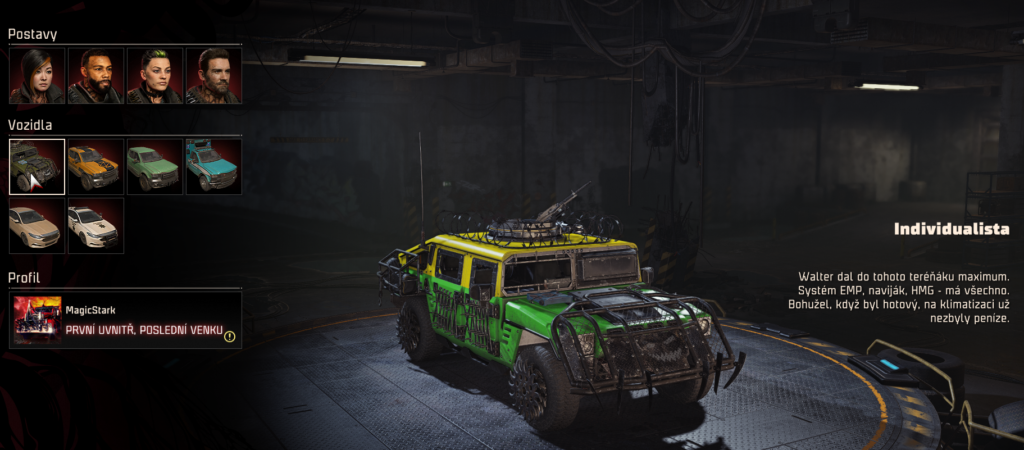
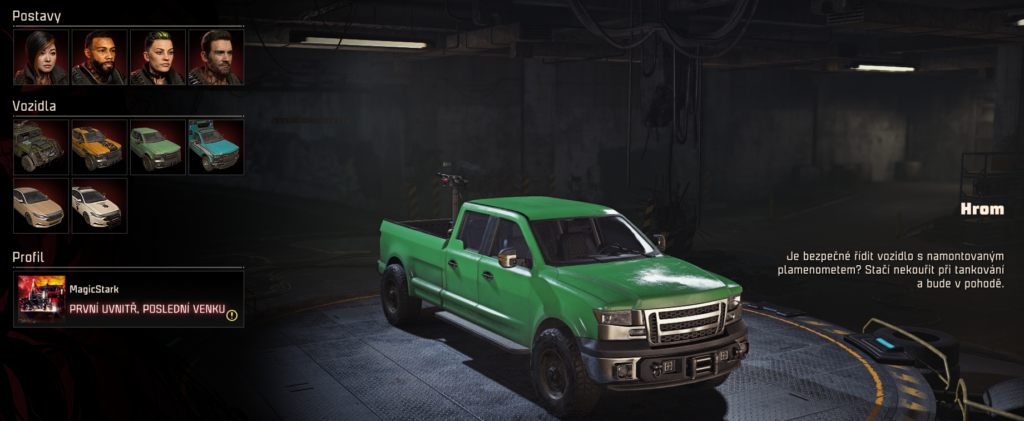
The biggest innovation, however, is the integration of vehicle mechanics. Saber Interactive leveraged their experience from the MudRunner and SnowRunner series here. Vehicles in Toxic Commando aren’t just fast transports; they have weight, realistic traction, and can get bogged down in deep mud. You must use the winch, monitor fuel levels, and cooperate with your crew. For example, the Banshee police car can lure enemies with its siren and then self-destruct, while the Ambulance heals surrounding players. This combination of FPS action and off-road simulation is refreshing and gives the game a unique face.
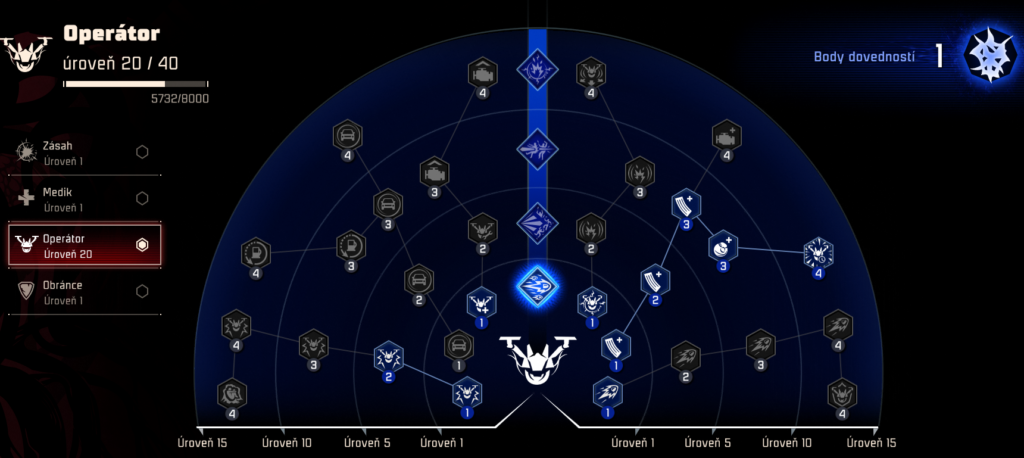
The progression system is built on four classes: Strike (DPS focusing on ammo and damage), Medic (healing aura and reviving), Operator (combat drone and vehicle repairs), and Defender (tank with an energy shield). Each class has a skill tree up to level 40. Weapons are upgraded through a color-coded tier system, and there is also a Prestige system similar to Call of Duty, where resetting a weapon to level one unlocks exclusive skins. This mechanical depth ensures that even after finishing the campaign, you have a reason to keep coming back and grinding for better gear for higher difficulties.
Mission structure is semi-open. Forget linear corridors; the maps are compact sandboxes with side objectives. During defense sequences, you can use materials (Scrap) to build electric fences, mortars, or machine gun turrets. These moments, blending shooting from the back of a pickup truck with building barricades, are the game’s highlight. Unfortunately, this great experience is dragged down by the ally AI. If you play alone, bots don’t use heavy weapons or interact with quest items, making the game almost unplayable on higher difficulties. Toxic Commando is designed for humans, not algorithms.
Final Verdict
John Carpenter’s Toxic Commando is a masterfully crafted piece that knows exactly who its audience is. If you are looking for a game that will infuse you with 80s nostalgia while offering modern technical execution, you can’t go wrong. It’s a game that shines brightest in full four-player co-op, where the chaos on screen turns into a coordinated dance of death accompanied by Carpenter’s synthesizers. Innovations in vehicle physics and the sophisticated Swarm Engine make this one of the most interesting horde shooters today.
On the other hand, the game has its darker sides. The short campaign, the requirement for a constant online connection, and the dysfunctional AI companions in solo mode are flaws that cannot be ignored. The story is passable but not groundbreaking, and progression can feel repetitive after a while. Nevertheless, given the reasonable starting price of $39.99 and the promise of future free updates with new maps and weapons, it is a very solid package. It’s not a revolution that will knock Left 4 Dead off its throne, but it’s a damn fun ride that no co-op action fan should miss.
FAQ
Q: How long is the campaign and how many missions does it have?
A: The campaign contains 9 missions divided into 3 acts. A first playthrough on Normal difficulty takes about 7 to 10 hours, depending on your playstyle and exploration.
Q: Can the game be played offline without an internet connection?
A: Unfortunately, no. The game requires a permanent internet connection (Broadband), even for solo mode with AI bots.
Q: Does the game support crossplay between different platforms?
A: Yes, the game offers full crossplay between PC (Steam and Epic), PlayStation 5, and Xbox Series X|S. You can play with friends regardless of which device they own the game on.
Q: Is there a localization for other languages?
A: Yes, the game includes subtitles for 16 languages (including Czech, French, German, etc.). Voiceovers remain in English.
Q: How does the vehicle system work compared to other shooters?
A: Vehicles here have advanced physics inspired by the MudRunner series. They can get stuck in mud, require a winch to get out, and have unique abilities (e.g., healing, attracting enemies with sirens).